
20 years Austria, 10 years Ireland: A Digest
Preface
I was born and raised in Austria (Styria to be specific) and moved to Dublin, Ireland around my 22nd birthday, which I subsequently made my home. In those 10 years I have often partaken in discussions that evolved around how life differs in the two countries (sometimes voluntarily, sometimes not so much). Usually these discussions end with more questions than answers for me (not that everything always calls for an answer) and have me ponder about how things could be or could have been. These thoughts are not usually productive and I believe a carefully and scientifically executed brain-dump is required to sort my head out. And that is what this is.
How to read
This is not a travel blog or a tourist guide, it’s not meant to persuade anyone to change their opinion about either place (or anything in general). It’s not a political opinion piece, though it’ll be inevitable to talk about politics and personal believes to some extend. It’s not a memoir or a work of poetry, but neither is it a scientific paper. Most importantly it’s not a “country A is good, country B is bad and that’s a fact” rage piece. What it is, is a digest of observations, processed and coalesced with research. A side-by-side of what I perceived (opinion) and how it actually is (facts). If it were a book, you’d probably find it in the pop-philosophy section.
The target audience for this text is … no-one. I am writing this for the purpose of writing, perhaps for myself to come back to it as a reference. I’m not expecting anyone else to read this, certainly not the whole thing. That being said, you might enjoy it regardless.
I will be talking about a variety of different topics to varying degrees of detail. Reading it from top to bottom is unlikely going to be feasible, nor is it required. Instead, I would suggest a browse through the table of content and pick a topic you might be interested in.
Comments and Feedback
There is no option to comment on the post on this website directly. If you have feedback (e.g. factual corrections) you can open an Issue on Github. For opinionated comments, you can message me on LinkedIn or send me an email (but you’ll have to go find my address somewhere else).
Disclaimer
I will be mixing fact and opinion. If it’s a fact, I will do my very best to include a reference to source material. If it’s an opinion I will do my best to use appropriate language denoting it as such.
Reference material
We can have an argumant about whether Wikipedia is or isn’t trustworthy or respectable as reference literature all day, but it is inarguably the most accessible and largest source of truth available and it certainly is good enough for the purpose. It is also very traceable and corrigible. Wikipedia will therefore most likely be the most referenced resource for any factual statements.
I will refrain from using LLMs (such as ChatGPT) as their output is in no way traceable or corrigible. Occasionally I will cite “independent” websites that look to be confidable as well as printed books, in which case I will link to a listong of the book on a website (such as Goodreads) including the number of the page I found the relevant information on.
Bias
Naturally, not all my opinions will reflect every one else’s so it may be useful to know where I’m “coming from”. The first thing that is to be said upfront is that I live a fairly economically-privileged live. This is very important to know since one’s economic situation will influence virtually all perceptions and everything one does.
My quality of life has - subjectively - improved after moving to Ireland. How? Why? I don’t know, it just somehow did. As a result, I tend to get quite defensive whenever people - especially those of similar backgrounds to mine - complain about the country extensively. It is almost a brotherly dynamic (I may curse you, but I’ll fight anyone else who dares to do the same).
It’s important to note that my migration has coincided with many other changes in my life and there are plenty of confounding factors - which I won’t all go into - that make it impossible to gauge to which extend the move contributed to this perceived improvement in life quality. Most notably, though, it coincided with me becoming - what I would consider to be - an adult (I was a late bloomer). I started doing things I wasn’t doing before and stopped doing things I did do before. I do therefore lack the first hand experience to make an objective comparison on many matters (though I doubt a believable objective comparison could be made anyway, due to the many variables influencing our experiences).
Just one example to show what I mean: I got a mortgage and bought a house in Dublin, I did not do the same in Austria. So whatever I say in relation to housing (except for the “hard facts”), is tainted by this difference. For Ireland I can bring in my own first-hand experience, for Austria I need to rely on anecdotes from others and the conclusions I may draw from the available reference material (such as statistics or newspaper articles).
One more thing: This should be considered a living document. I may updated and extend the text at any time. A history of changes will, however, be available in Git version control.
Now that you have the context and come equipped with the required grain of salt, let’s get started by talking about the countries’ histories.
History and Geography
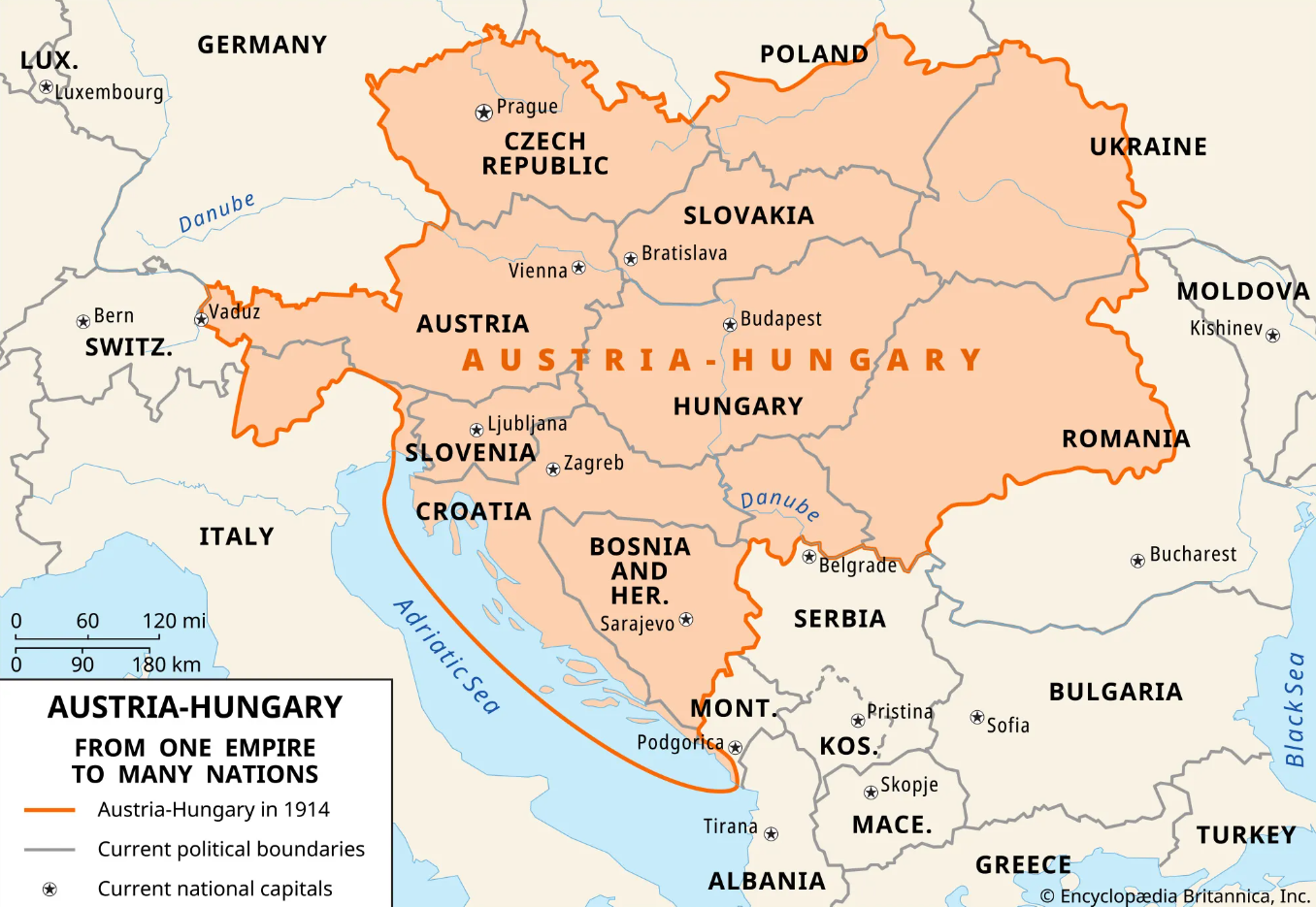
What even is Austria?
The more observant amongst you may have noticed that Austria (today) is surrounded by land (it is landlocked). Ireland meanwhile is surrounded by water (it is sealocked). When we talk about Ireland, we almost always refer to the whole landmass that forms the island, which has been looking pretty much the same way it does today for at least 12000 years. While Ireland has of course been subjected to imperialistic activity, the geographical area we refer to when we talk about Ireland has remained the same and will remain the same for the foreseeable future, short of changes due to rising sea levels and/or artificial reclamation of landmass. As a result, it is fairly unambiguous what we mean when we talk about the History of Ireland.
The same cannot be said about Austria. One of the most popular Austrian History books - Geschichte Oesterreichs - begins with the chapter What does “Austria” mean?.
Empire Exit
Both Ireland and Austria have experienced significant and defining political changes towards the end of the First World War in 1918.
On the 21st of November 1916, Austria’s second-last and - arguably - most famous monarch, Kaiser Franz Joseph I died from pneumonia in Schonbrunn palace, one of the Habsburg monarchy’s main residences in Vienna. This was two years into WWI, which itself was triggered by the assasination and death of heir presumptive to the very same throne, Archduke Franz Ferdinand (Franz Joseph’s nephew) in Sarajevo.
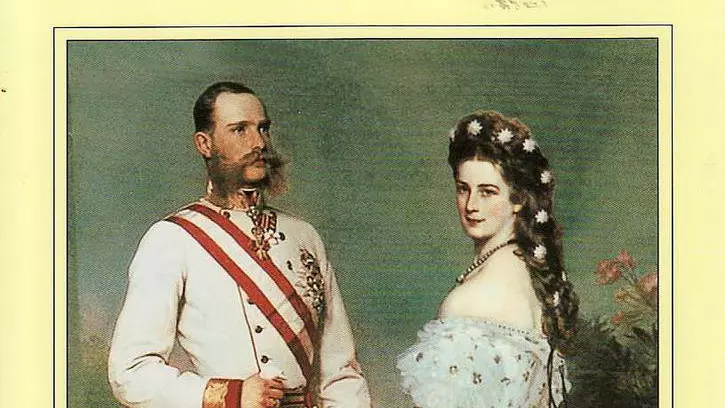
While neither Franz Ferdinand’s nor Franz Joseph’s death immediately ended Habsburg’s 636 year reign, the monarchy concluded only shortly after on November 11th 1918 with Kaiser Karl I waiving all rights to participate in any state business, coinciding with the WWI armstice between the Allies (the Entente) and Germany, marking the end of the war.
But the dynasty’s end had been looming at least since the French Revolution(p.193, Walzer under der Kaeseglocke). Habsburg had to fight an uphill battle to retain its status quo in the wake of Napoleon’s wars, his abolition of the Ancien Regime and the subsequent introduction of the Civil Code which attibuted rights to the citizens of France and the annexed territories and led to a more liberal and progressive way of living compared to the aristocracy-led Habsburg empire.
The fear of losing grip on the established way of reign lead to the Congress of Vienna….
3 Header
Some more text
bold text
Some more text